

Therapeutic Parenting in Residential Child Care (TPRCC)
Elements Care have invested in a dedicated on-site therapist so therapeutic understanding can inform ordinary residential life – not only scheduled sessions.
Elements Care combines family style residential homes with an embedded therapeutic approach designed to strengthen the care provided throughout the whole day.
Therapeutic Parenting in Residential Child Care (TPRCC) has been developed from our experiences in working as residential practitioners with psychologists in this sector.
We understand that traumatised children require continual intervention, and this should operate in the space they live and learn. We call this ‘the other 23 hours’, which means that residential childcare practitioners can consciously practice therapeutic trauma informed care in all their interactions with the children and their colleagues.
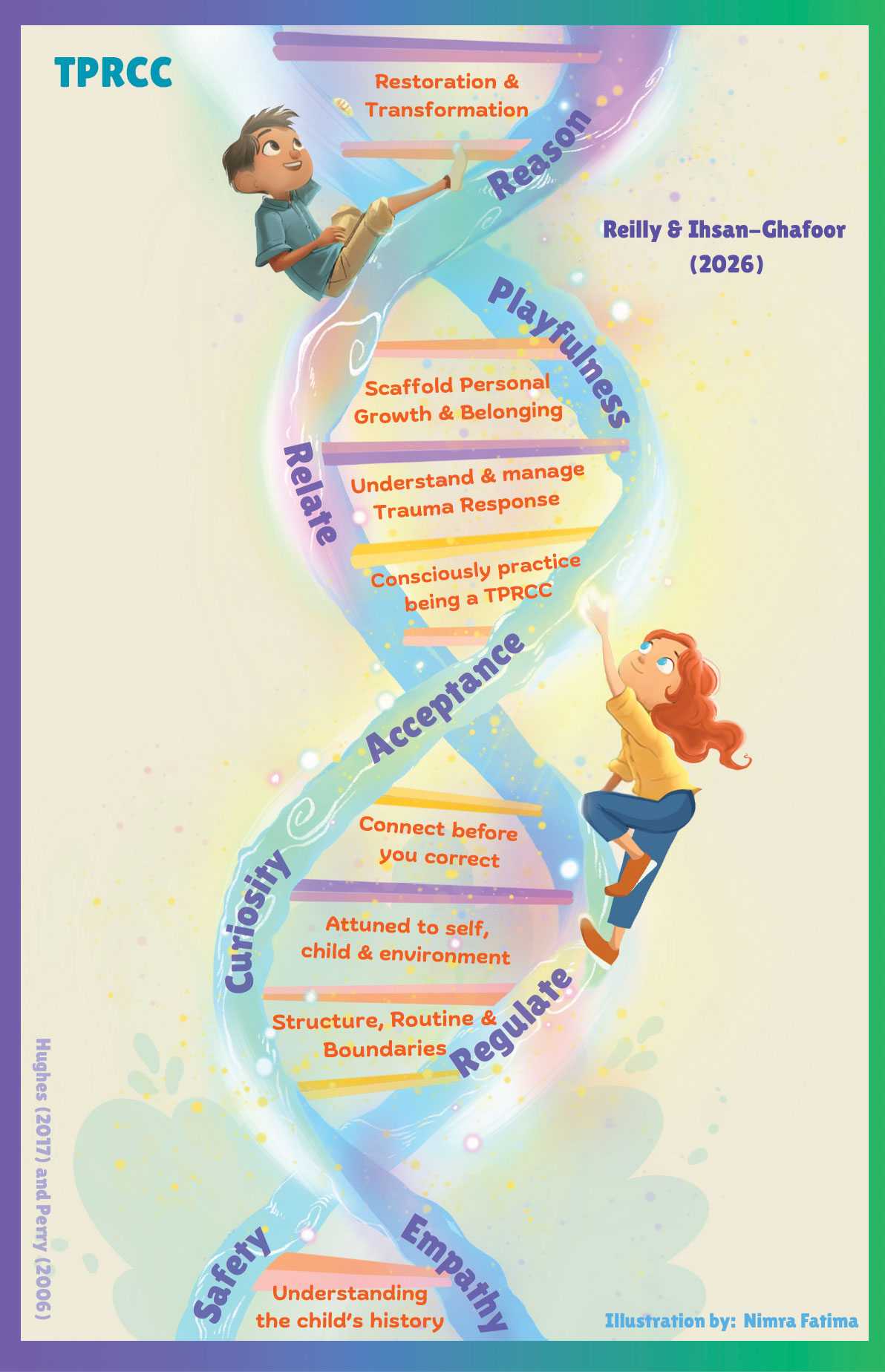
Please note the illustration sits within our three-tiered framework of intervention. The illustration demonstrates tier one of this model where practitioners’ capacity is developed through psychological training, applied workshops, consultancy and reflective practice.
We have used a DNA illustration to emphasise the strands of Safety, PACE and RRR as these are strategies our team continually use in their interactions with the child.
Safety should always be considered in your practice and is the first thing we need to do to create predictability for the young people.
These strands will constantly oscillate depending on what the child needs from you at a given time.
The steps through the middle of the DNA are also strategies practitioners will apply in their practice.
The first step of this model is to understand the child’s history in the context of their attachment and traumatic experiences as this provides context to their behaviour.
The next is to ensure that structure, routines and boundaries are the cornerstone of what is, and what is not, acceptable within your home. This also creates predictability if implemented consistently. Being attuned to yourself (knowing your triggers, window of tolerance and having strategies to cope) as well as being attuned to the child’s emotional state and the environment is next on the step as this allows you to be proactive rather than reactive within your home environment.
Connecting before correcting is another strategy that practitioners can keep in mind when children are dysregulated, and their behaviour becomes challenging. If we try and correct before understanding what is going on for them it may trigger a shield of shame, which can get into a cycle of drama. Moving up the steps when you are aware of what you are doing and why you can consciously practice being a TPRCC. This requires you to know yourself as well as the child, team and environment.
Understanding and managing trauma responses will require an understanding of their history as well as reading the child so you can intervene safely.
Once regulated you can scaffold the child’s personal growth and belonging. Overtime, this restores their genuine self and transforms into applying new coping strategies and integrating the seven domains of trauma impacting on their sense of self, regulated emotionally, biologically and behaviourally, where they can use their cognitive and executive functioning skills to stay consciously present.
This will all be underpinned by your attachment relationship with the young person where they can learn to trust others and they can be trusted by others, allowing a reciprocal flow of supportive nurturing interactions.
Remember, it will not be a ‘hey presto’ moment that helps the children but a constant drip of attuned TPRCC initiatives and interactions that could help with restoration and transformation for every child.
Parent or carer?
We care about your goals and aspirations for your young ones. Every young person is important to us, find out why.
Learn about our homes
Situated in Shipley, West Yorkshire, a highly regarded residential location with access to excellent schools, colleges and green spaces.
Get in touch
We have a firm commitment to providing high quality meaningful care and support to all of those in our care.